
The Mapungubwe Collection
Few heritage narratives are as closely connected to the UP as Mapungubwe. For more than nine decades, UP has stewarded this internationally significant archaeological collection, supporting research, teaching, training, education, conservation and public engagement. Repositioning the Mapungubwe Collection within Science, Technology, Engineering, Art and Museums (STEAM) remains a curatorial vision for the UP Museums.
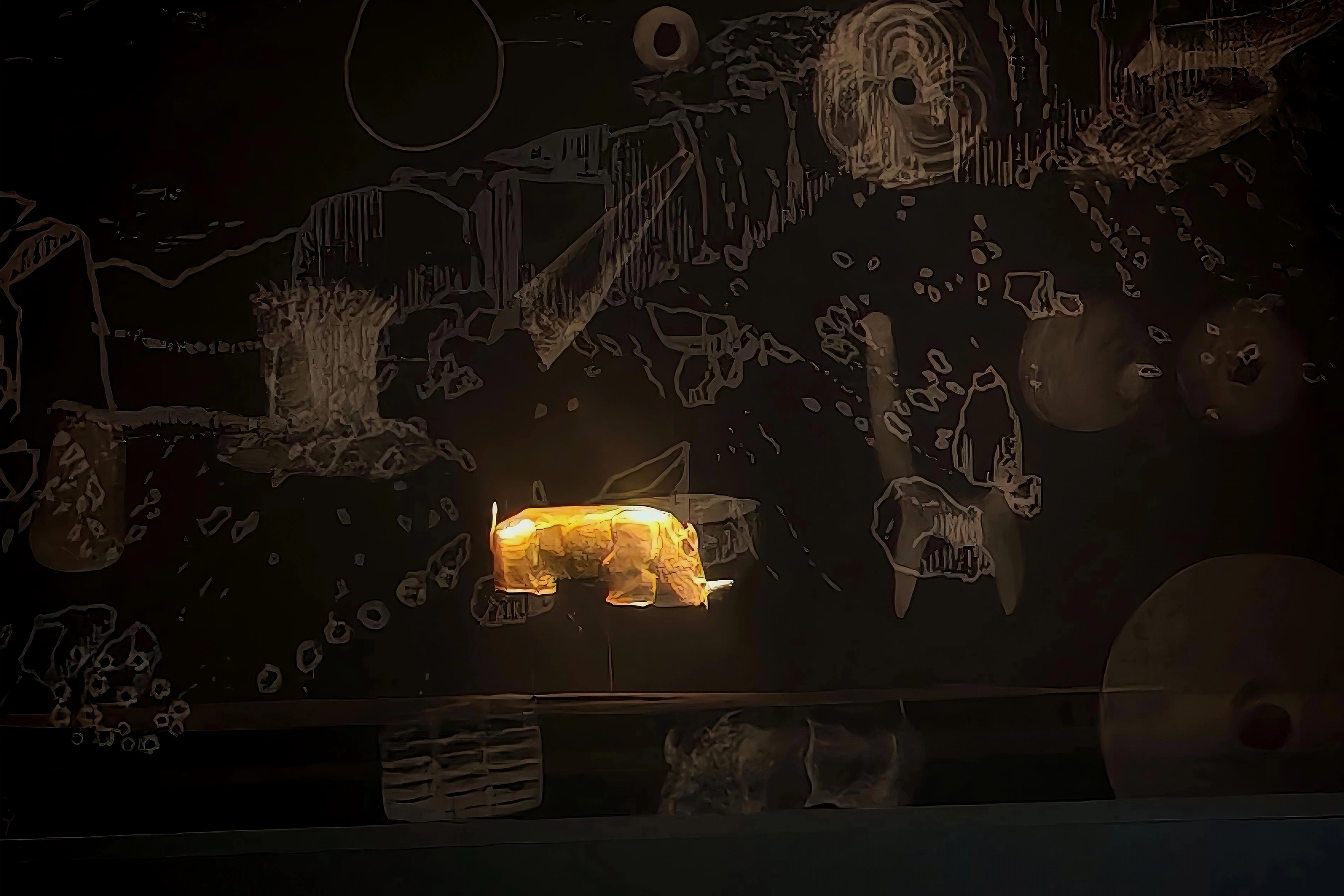
The Collection comprises material from the site known as Mapungubwe, providing archaeological evidence of the emergence of the first complex, socially stratified society in southern Africa between approximately 900 and 1300 CE. The extensive regional and international trade networks demonstrate Africa’s longstanding global connections. Dating back over 1000 years, it is South Africa’s earliest developing financial capital, and the Mapungubwe Cultural Landscape is recognised by UNESCO as a World Heritage Site.
Among its most iconic objects is the Mapungubwe gold rhino, alongside artefacts of gold, copper, iron, ceramics, glass, shell beads, stone, ivory, and bone. Together, these materials provide evidence of indigenous technology, global trade, social identity, memory, sacredness and spirituality. The reframing of the gold rhino’s meaning and significance as both a national resource and its global value contributes to global conversations about cultural stewardship, sustainability and inspiration for future generations.
For UP, the Mapungubwe Collection provides a powerful platform for object-based learning, transdisciplinary research, conservation training, curatorial practice and heritage education. The extensive Mapungubwe Collection and its associated Mapungubwe Archive, the only one of its kind, enable students and researchers to engage directly with African histories, indigenous knowledge systems, and material culture while adopting ethical approaches to heritage stewardship.
The Mapungubwe Collection is not simply a remnant of the past, but an actively living and accessible resource for research, teaching, innovation and responsible stewardship, connecting Africa’s deep heritage with the future envisioned by UP.
Courtesy of Dr Sian Tiley-Nel, Specialist Curator of the Mapungubwe Collection and Head of UP Museums
For more information, please email: museums@up.ac.za or visit us at https://www.up.ac.za/museums-collections
You can view the Mapungubwe Collection and Archive at UP Museums from 16:00 to 18:00 on 7 and 8 October.
Viewing the Mapungubwe Collection and Archive
1. Viewing will only be from 16:00 to 18:00 on both nights (7 & 8 October).
2. No food and drink will be allowed inside the Old Arts Building.
3. Please do not touch any of the displays or artefacts.